

Looking for Original Kashmiri Saffron? Your Guide to Mongra, Lacha and Buying Genuine Kesar Online
By: Kashmir Bazar | October 2026
Not all saffron is the same. From the deep-red strands of Mongra to the traditional appearance of Lacha, discover what makes Kashmiri Kesar special, how to understand its quality and what to check before ordering saffron online.
A pinch of saffron can change the character of an entire recipe.
It adds colour to biryani, fragrance to milk, richness to desserts and a distinctive flavour to traditional Indian preparations. It can also turn a simple cup of Kahwa into something special.
But when it comes to buying saffron, there is one question that matters more than anything else:
Are you getting genuine saffron, and do you know exactly what you are buying?
Saffron is among the world’s most expensive spices. Its production involves delicate flowers, careful harvesting and a labour-intensive process that produces only a small amount of the finished spice.
That value has also created a market where misleading labels, artificial imitations and unclear product descriptions can confuse customers.
For anyone looking to buy pure Kashmiri saffron online, understanding the difference between Mongra and Lacha is a useful starting point.
Kashmir Bazar brings this product story into focus, helping customers explore regional food specialities and understand what makes a traditional Kashmiri ingredient worth discovering.
Why Kashmiri Saffron Has a Special Place in the Spice Market
Kashmir is internationally recognised for its distinctive food culture, agricultural products and traditional ingredients.
Among these, saffron holds a particularly prestigious position.
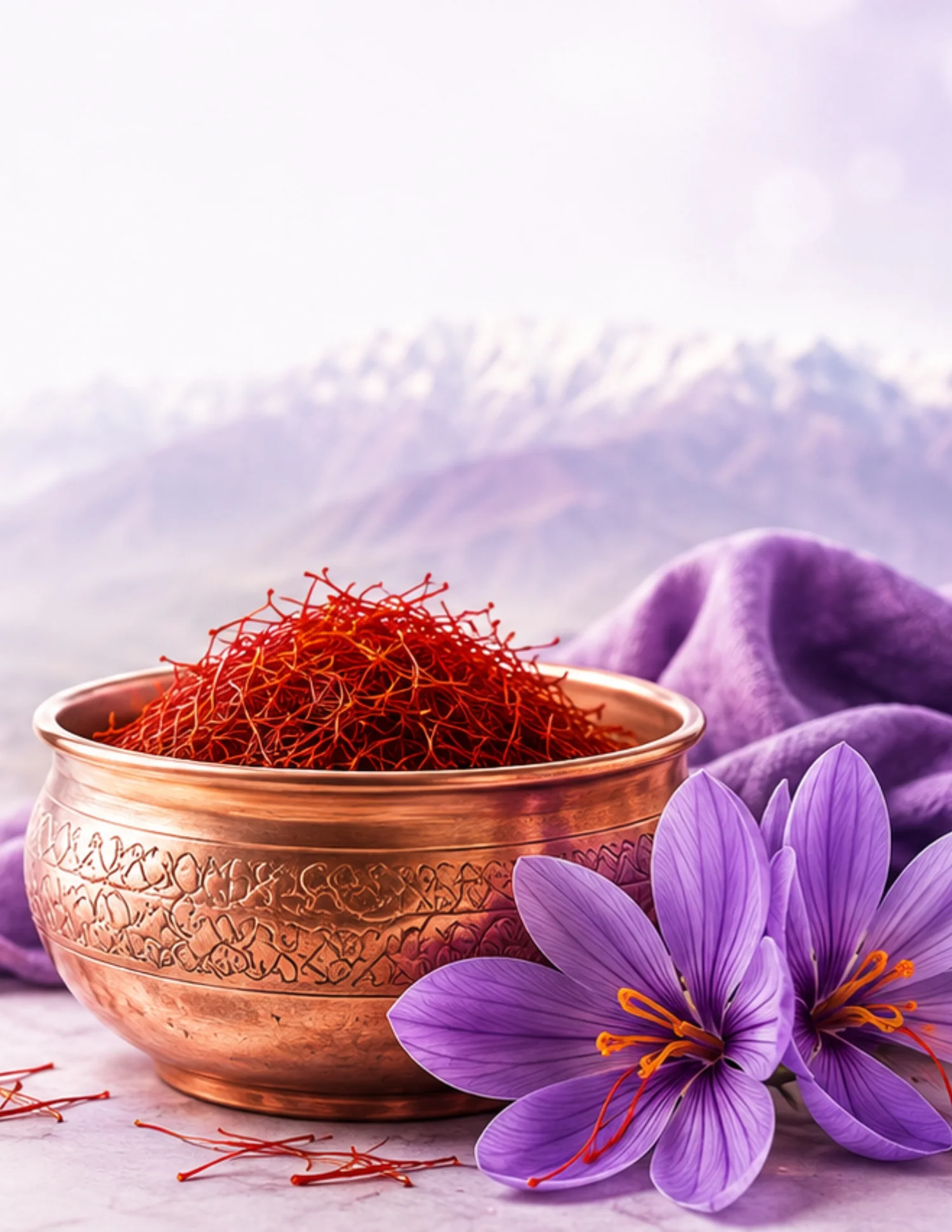
The spice is cultivated from the flower Crocus sativus, commonly known as the saffron crocus. Each flower produces three red stigmas, which are collected and dried to create saffron.
The Pampore region of Pulwama district is particularly famous for its saffron-growing landscape.
The cultivation is closely connected to the Karewa highlands, where local agricultural conditions and generations of farming knowledge have shaped the region’s saffron tradition.
The flowering season is relatively short, and harvesting requires considerable care.
Flowers are collected, the stigmas are separated and the delicate material is dried under suitable conditions.
This is not a crop that can simply be harvested, processed and packed in the same way as ordinary bulk spices.
Its production demands attention at every stage.
Kashmir Saffron Has GI Recognition
Kashmir Saffron has been registered under India’s Geographical Indications system.
The official GI Registry lists it under Application No. 635, registered on 1 May 2020.
This recognition is important because it connects the product’s identity with its geographical origin.
However, customers should remember that GI recognition protects the regional product identity. It does not automatically establish that every online listing claiming to sell Kashmir saffron contains genuine GI-origin produce.
That is why transparent product details and reliable sourcing remain essential.
The Three Natural Characteristics That Define Saffron Quality
What makes saffron so distinctive?
Its colour, fragrance and taste are closely associated with three important compounds.
Crocin — The Colour Factor
Crocin is the principal pigment responsible for saffron’s strong colouring ability.
It gives the spice its characteristic golden-yellow colour when infused.
Safranal — The Aroma Factor
Safranal contributes significantly to saffron’s distinctive fragrance.
It helps create the warm, floral and slightly earthy aroma associated with genuine Kesar.
Picrocrocin — The Flavour Factor
Picrocrocin contributes to saffron’s characteristic bitter taste.
Together, these compounds are important indicators in saffron quality evaluation.
Their concentration can vary according to cultivation, harvesting, processing and storage.
This is why two saffron samples that look similar may not necessarily have identical quality.
Mongra vs Lacha: Which Kashmiri Saffron Is Right for You?
If you have ever browsed an online saffron store, you may have noticed two familiar names: Mongra and Lacha.
These are traditional Kashmiri categories that describe how the saffron strands are processed and presented.
They are not simply different brand names.
1. Mongra Saffron: The Premium Red Strand
Mongra is traditionally the more premium Kashmiri saffron presentation.
It consists predominantly of the deep-red stigma portion, with the yellow style removed.
This gives Mongra its distinctive appearance.
Why customers choose Mongra:
- Predominantly deep-red strands.
- Premium traditional presentation.
- Characteristic saffron aroma.
- Excellent colouring potential.
- Suitable for special dishes and festive preparations.
- Popular among customers who prefer saffron with minimal yellow portions.
Mongra is often priced higher because producing it requires additional separation and selection.
It is a particularly attractive choice for people who want a premium saffron presentation for gifting, special meals or regular gourmet cooking.
2. Lacha Saffron: The Traditional Whole-Strand Form
Lacha, also called Lachha or Laccha, retains more of the natural saffron strand.
It contains the red stigma portion with some of the yellow style still attached.
This is a traditional form of Kashmiri saffron and should not automatically be confused with adulterated material.
Why customers choose Lacha:
- Traditional strand appearance.
- Red and yellow portions naturally visible.
- Characteristic saffron fragrance.
- Suitable for everyday cooking.
- Useful for milk, Kahwa, rice dishes and desserts.
- Often available at a different price point from Mongra.
Lacha is a practical option for customers who appreciate traditional saffron presentation and want to explore another form of authentic Kesar.
Mongra vs Lacha: A Quick Comparison
| Buying consideration | Mongra | Lacha |
|---|---|---|
| Appearance | Predominantly deep red | Red with some yellow style |
| Processing | Yellow style removed | More of the natural strand retained |
| Traditional market position | Premium | Traditional alternative |
| Culinary use | Gourmet and festive dishes | Everyday and festive cooking |
| Price positioning | Usually higher | Often comparatively lower |
Which one should you buy?
If you prefer predominantly red strands and a premium presentation, Mongra is a natural choice.
If you want the traditional whole-strand form, Lacha deserves consideration.
But remember: a traditional grade name does not replace laboratory testing. The quality of the actual batch matters.
How to Check Whether Your Kashmiri Saffron Is Genuine
Buying saffron online should be convenient, but convenience should never come at the expense of authenticity.
The Food Safety and Standards Authority of India provides an official method for identifying saffron in filament and powdered forms. It also publishes guidance on common spice adulteration concerns.
Here are some useful checks for customers.
Check the Appearance
Genuine saffron consists of dried stigmas of the saffron flower.
The strands have distinctive natural structures, including an enlarged, trumpet-like upper portion.
Mongra should generally have predominantly red stigma material, while Lacha retains more of the yellow style.
Examine the Aroma
Authentic saffron has a distinctive natural fragrance.
An unusually perfumed or chemical-like smell should encourage caution.
Observe How It Releases Colour
Genuine saffron gradually releases colour when soaked in water.
Artificially coloured substitutes may release colour differently or much more rapidly.
However, a home water test is only a preliminary check. It cannot conclusively establish origin, purity or ISO grade.
Read the Product Label
Before ordering, check:
- Product name and variety.
- Mongra or Lacha identification.
- Net weight.
- Country and region of origin.
- Seller or packer details.
- Batch or lot number.
- Packing and best-before information.
- Applicable food-safety information.
- Available test reports or quality documentation.
Look for Reliable Quality Testing
ISO 3632 is an important international standard used for evaluating saffron.
It considers parameters including colouring strength, aroma-related characteristics and other quality specifications.
A seller who provides relevant, verifiable test documentation gives customers more information than a listing that relies only on words such as premium or original.
Explore authentic regional products, traditional ingredients and Kashmiri food specialities at Kashmir Bazar.
Why Is Pure Kashmiri Saffron So Expensive?
The price of saffron is not simply a reflection of its popularity.
It begins with the flower itself.
Each saffron flower produces only three stigmas. Those stigmas must be separated manually and dried carefully.
A substantial quantity of flowers is therefore needed to produce even a small amount of finished saffron.
Several factors influence its final price:
- Cultivation: Saffron requires suitable soil, climate and careful crop management.
- Harvesting: The flowering period is relatively short.
- Manual labour: Flowers and stigmas require delicate handling.
- Processing: Separation and drying influence the final product.
- Quality: Colour, aroma, moisture and other characteristics affect market value.
- Packaging: Proper storage and protective packaging help maintain quality.
- Traceability: Reliable sourcing and quality documentation add value.
This explains why extremely cheap saffron advertised as premium Kashmiri Mongra should be approached carefully.
A genuine product has a production cost that cannot simply be ignored.
How to Use Kashmiri Saffron in Your Kitchen
Saffron is versatile, and you do not need complicated recipes to enjoy it.
A small quantity can add character to many everyday preparations.
Kesar Milk
Add a few saffron strands to warm milk and allow them to infuse.
You can combine them with cardamom, almonds or a little honey according to your preference.
Biryani and Pulao
Prepare a saffron infusion using warm water or milk and add it to rice during the final stages of cooking.
This creates the familiar golden colour and distinctive aroma.
Kheer and Phirni
Saffron is a popular ingredient in traditional Indian milk desserts.
It adds fragrance and a rich appearance.
Kahwa
A few saffron strands can complement the flavours of Kashmiri Kahwa, particularly when combined with cardamom, cinnamon and almonds.
Festive Sweets
Saffron works beautifully in selected preparations such as kulfi, rasmalai, barfi and other celebratory desserts.
Special Rice Preparations
From traditional pulao to elaborate festive meals, saffron adds an elegant finishing touch.
A Simple Guide to Preparing Saffron Infusion
Want to get more from your saffron?
Try this simple method:
- Take a small pinch of saffron strands.
- Add them to a little warm water or milk.
- Allow the mixture to stand for around 10–20 minutes.
- Let the colour and fragrance develop.
- Add the infusion to your recipe.
Avoid excessive heat or unnecessarily prolonged boiling.
The idea is to allow the strands to release their natural characteristics gradually.
Kashmiri Saffron and Traditional Wellness
Saffron has a long history of use in traditional food and wellness practices.
It contains naturally occurring compounds that have attracted scientific interest, particularly because of their antioxidant properties.
Modern research has also examined standardised saffron extracts in relation to mood and emotional well-being.
A 2026 systematic review and meta-analysis of 34 randomised controlled trials involving 1,769 adults reported improvements in certain self-reported anxiety and depression measures. However, the results were not consistent across every clinical assessment scale.
That distinction matters.
Research on standardised extracts does not mean that adding a few saffron strands to milk or food will treat depression, anxiety or other health conditions.
Saffron should be enjoyed as a culinary ingredient rather than marketed as a guaranteed medical solution.
People considering concentrated saffron supplements, particularly those who are pregnant or taking medication, should seek medical advice.
Saffron for Gifting: A Small Product With a Premium Appeal
Some gifts are appreciated because they are expensive.
Others are remembered because they are meaningful.
Kashmiri saffron combines both appeal and cultural significance.
It is compact, distinctive and associated with one of India’s most recognised regional food traditions.
It can be considered for:
- Wedding gifts.
- Festival hampers.
- Corporate gifting.
- Housewarming presents.
- Family celebrations.
- Special-occasion food hampers.
- Gifts for people who enjoy cooking.
Mongra is particularly attractive for a premium presentation, while Lacha offers another traditional option.
For gifting, attractive packaging should always be accompanied by clear product information and reliable quality.
How to Store Saffron After Purchase
Saffron is delicate.
Even high-quality saffron can lose its characteristic fragrance when exposed to moisture, sunlight and unsuitable storage conditions.
Follow these simple precautions:
- Keep it in an airtight container.
- Store it away from direct sunlight.
- Avoid humid environments.
- Keep it away from strong-smelling spices.
- Close the container properly after use.
- Follow the seller’s storage recommendations.
A small airtight glass container is a practical option for home storage.
Why Buy Kashmiri Saffron From a Reliable Online Seller?
The internet has made regional products more accessible than ever before.
Customers no longer need to visit a traditional spice market to explore Kashmiri saffron.
However, online shopping also makes it important to check product descriptions carefully.
Before placing an order, make sure the seller provides sufficient information about the variety, origin, quantity, packaging and available quality documentation.
Do not rely solely on promotional expressions such as:
- 100% pure.
- Original Kesar.
- Premium quality.
- Best saffron in India.
- Direct from Kashmir.
These descriptions should be supported by credible product information.
A responsible buying decision begins with transparency.
Discover Kashmir’s Food Heritage With Kashmir Bazar
Kashmiri saffron is one of the Valley’s most recognised products, but it represents only a small part of the region’s rich culinary identity.
The wider Kashmiri food collection includes walnuts, almonds, dried fruits, Kahwa, spices, traditional ingredients and a variety of regional specialities.
Kashmir Bazar aims to make discovering these products easier for customers who appreciate regional flavours and traditional products.
Whether you are exploring saffron for your kitchen, searching for a meaningful gift or discovering Kashmiri food for the first time, the experience should begin with reliable information and a clear understanding of what you are buying.
Explore the collection at Kashmir Bazar.
Ready to Order Kashmiri Mongra or Lacha Saffron?
Looking for product details, current availability, pack sizes or assistance with your order?
Call or WhatsApp: +91 94697 2436
Visit: www.kashmirbazar.in
Discover authentic flavours. Explore regional products. Experience Kashmir.
Frequently Asked Questions
1. What is the best Kashmiri saffron to buy?
Mongra is traditionally positioned as the premium Kashmiri presentation, while Lacha offers the traditional whole-strand form. The best choice depends on your preferences, intended use and the verified quality of the batch.
2. Is Mongra saffron pure?
Mongra is a traditional form of saffron made primarily from the red stigma portion. However, the name alone does not prove the purity or laboratory quality of a particular packet.
3. Is Lacha saffron genuine?
Yes. Lacha is a traditional Kashmiri saffron presentation that retains more of the natural strand, including a portion of the yellow style. Its appearance should not automatically be treated as evidence of adulteration.
4. What is the difference between Mongra and Lacha?
Mongra has the yellow style removed and consists predominantly of red stigma material. Lacha retains more of the natural saffron strand.
5. Why is Pampore famous for saffron?
Pampore has a long history of saffron cultivation. Its Karewa landscape, agricultural conditions and traditional farming practices have contributed to the region’s reputation.
6. Is Kashmiri saffron GI registered?
Yes. Kashmir Saffron is registered under India’s GI system under Application No. 635.
7. How much saffron should I use in cooking?
A small pinch is generally sufficient for many recipes. The quantity depends on the preparation, the amount of food and the desired intensity.
8. How do I identify genuine saffron at home?
Appearance, fragrance and gradual colour release can provide preliminary clues, but no simple home test conclusively establishes authenticity, geographical origin or ISO quality grade.
9. Does saffron improve mood?
Some clinical studies have investigated standardised saffron extracts for mood-related outcomes. The evidence is still subject to limitations, and ordinary culinary use should not be considered a treatment for mental health conditions.
10. Can I order Kashmiri saffron online from Kashmir Bazar?
Customers can explore the available product collection through Kashmir Bazar and contact +91 94697 2436 for ordering enquiries.