

By: Kashmir Bazar | July 2026
Kashmir Bazar: The Marketplace Bringing the Valley’s Heritage to Your Doorstep
Ask anyone who has ever wrapped themselves in a genuine Pashmina shawl on a cold evening, or sipped a cup of saffron-laced Kahwa after a long day, and they’ll tell you the same thing: Kashmir doesn’t just make products, it makes memories you can hold in your hands. The valley’s snow-fed rivers, walnut orchards, saffron fields, and centuries-old artisan families have quietly produced some of the finest craftsmanship and flavours in the world — long before “heritage shopping” became a trend.
The problem has never been that Kashmir’s products aren’t good enough. It’s that the market around them has gotten murky. Machine-loomed shawls sold as “Pashmina.” Dyed corn silk passed off as saffron. Mass-produced trinkets labelled “handmade.” For every genuine artisan trying to sell their craft honestly, there are a dozen imitators cashing in on the Kashmir name.
Kashmir Bazar exists to cut through that noise. It’s built as a curated marketplace — part craft store, part gourmet pantry, part cultural archive — where every shawl, carving, spice tin, and gift hamper is expected to earn its “Kashmiri” label rather than just borrow it. Here’s a detailed look at what’s inside, why the details actually matter, and how it stacks up against the rest of the market.
Why “Authentic Kashmiri” Is Harder to Guarantee Than It Sounds
Before getting into the products themselves, it’s worth understanding why authenticity is such a big deal in this category — because it isn’t just a marketing angle, it’s a legal and economic one.
Products like Kashmir Pashmina, Kashmir Saffron, Kashmir Walnut Wood Carving, Papier-Mâché, and Kashmiri Hand-Knotted Carpets all carry official Geographical Indication (GI) tags issued under India’s GI Act. A GI tag is essentially a product’s birth certificate — it legally certifies that an item was made in a specific region, using specific traditional methods, by people entitled to use that name. Kashmir Pashmina was among the earliest of these, registered back in 2005, specifically to fight the flood of machine-woven imitations pouring out of textile hubs like Ludhiana and Amritsar. Genuine, GI-certified Pashmina pieces carry a tamper-proof, QR-scannable authentication tag issued through the Craft Development Institute in Srinagar — break the tag, and it can’t be reapplied to another product.
Kashmiri Saffron received its own GI protection in 2021, part of a batch of nine Kashmiri products recognised that year, precisely because saffron counterfeiting — dyed corn silk or safflower petals sold as “pure Kashmiri saffron” — has been a decades-long problem for both buyers and legitimate growers. Walnut Wood Carving, protected since the mid-2000s, guards a craft where artisans known as Naqash hand-carve furniture using techniques like undercutting, raised carving, and intricate lattice work (jaali), passed down through families in Srinagar’s Fateh Kadal locality for generations.
This is the backdrop Kashmir Bazar operates against — and it’s why leading with verifiable authenticity, rather than just the word “authentic,” is the whole point.
Kashmiri Crafts: Heirlooms, Not Just Purchases
Every genuine Kashmiri craft item carries two things: a technique refined over centuries, and a family that’s still practising it. Kashmir Bazar’s craft section is built around exactly that idea.
Pashmina Shawls sit at the top of the list, and for good reason — they’re arguably the most imitated textile product in the world. A real Pashmina shawl is handspun from Changthangi goat wool with a fibre fineness of around 16 microns, then handwoven on a traditional wooden loom. It takes weeks, sometimes months, to complete a single piece, depending on the intricacy of the embroidery. Buyers shopping for Pashmina shawls online through Kashmir Bazar can expect this level of craftsmanship — not a soft acrylic blend dressed up in Kashmiri branding.
Hand-Knotted Carpets are another slow-crafted marvel — each carpet tied knot by knot, sometimes containing hundreds of thousands of individual knots per square metre, often following patterns passed down as an oral “code” between master weavers and apprentices.
Walnut Wood Carving brings Kashmir’s forests into the living room — cabinets, jewellery boxes, and wall panels carved from Kashmir’s own Wantu, Dun, and Khakazi walnut varieties, prized for their density, sheen, and fine grain.
Papier-Mâché Décor rounds out the collection — layers of paper pulp moulded and hand-painted with intricate floral and paisley motifs, a craft that has decorated everything from Mughal-era palaces to modern-day home décor shelves.
None of this is disposable décor. It’s slow-made, hand-finished, and meant to outlast trends — which is exactly why Kashmir Bazar frames these as heirlooms rather than “products.”
Kashmiri Arts: The Valley’s Quieter Masterpieces
While shawls and carpets get most of the spotlight, Kashmir’s painting, calligraphy, and jewellery traditions deserve just as much attention. Traditional Kashmiri paintings often draw on Persian and Mughal artistic influences — intricate florals, valley landscapes, and calligraphic verses rendered with painstaking detail. Handmade Kashmiri jewellery, meanwhile, frequently reflects regional enamel work and motifs unique to the valley’s craft lineages.
What makes this section genuinely interesting on Kashmir Bazar is the emphasis on artisan storytelling — instead of an anonymous product listing, each art piece is tied back to the technique and tradition it comes from. For heritage-conscious buyers, that context is often the entire reason to choose a handmade piece over a factory print.
Kashmiri Food: A Feast Worth Waiting For
If Kashmir’s crafts are its heirlooms, its food is its living memory — recipes and rituals that have barely changed across generations, even as everything else around them has.
Kashmiri Saffron: The Valley’s Crimson Gold
Grown almost exclusively in the Pampore region, Kashmiri saffron is considered among the finest in the world for its deep colour, potent aroma, and high crocin content. Its GI certification exists specifically to protect buyers from the widespread counterfeiting problem — so when you buy Kashmiri saffron online through a verified source, you’re not just paying for flavour, you’re paying for the guarantee that it’s real.
Dry Fruits: Walnuts, Almonds, Apricots
Kashmir’s orchards produce some of the subcontinent’s best walnuts, almonds, and apricots — thin-shelled, oil-rich, and harvested at peak ripeness. These aren’t just snacks; they’re staples in Kashmiri Wazwan garnishing, Kahwa blends, and festive gifting.
Kahwa: The Valley in a Cup
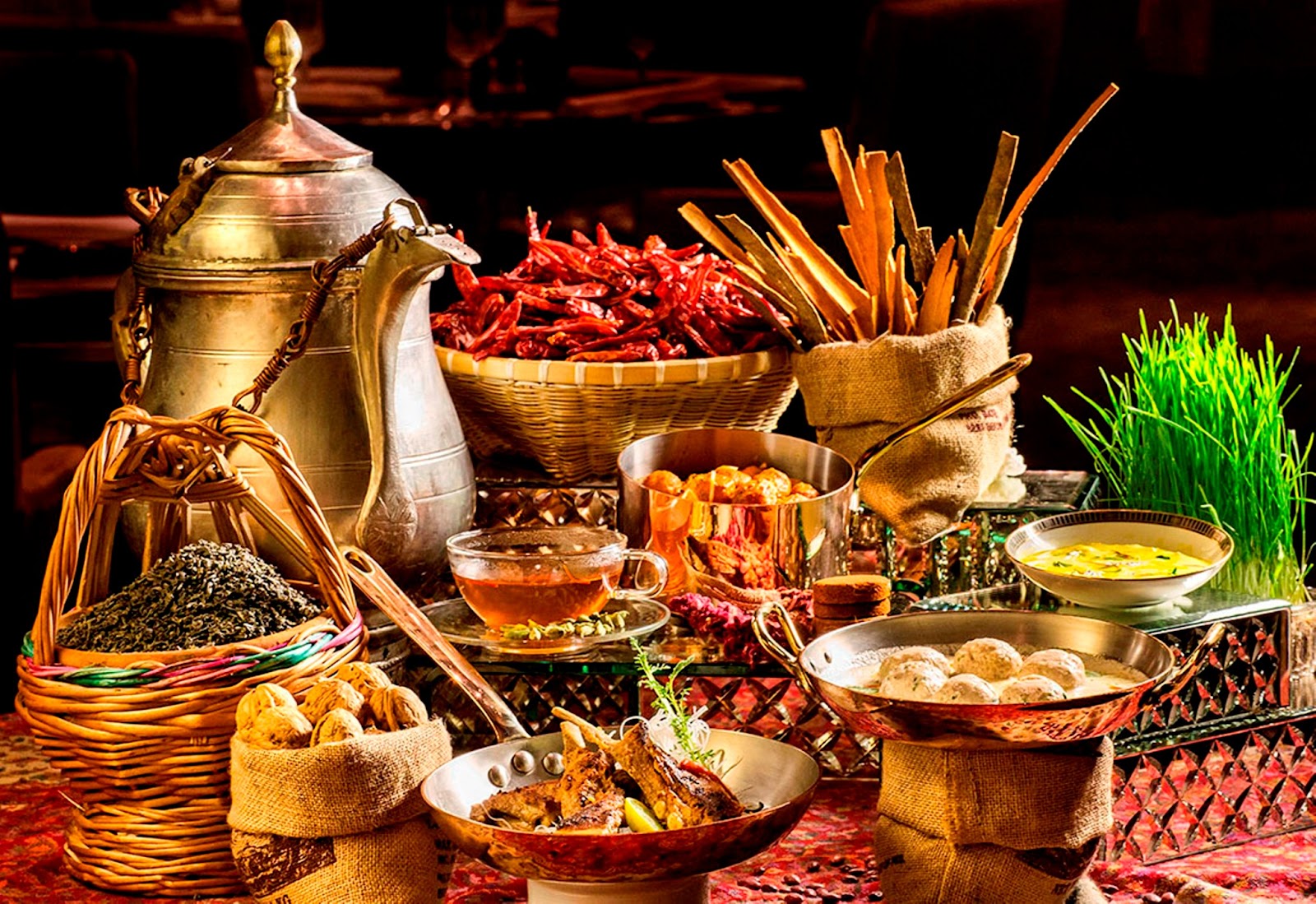
No introduction to Kashmiri food is complete without Kahwa — a green tea infusion brewed with saffron strands, cinnamon, cardamom, and often crowned with slivered almonds. It’s traditionally served throughout a Wazwan feast, cutting through the richness of the meat courses, and it remains a daily ritual in most Kashmiri households, winter or summer.
Wazwan: Kashmir’s Legendary 36-Course Feast
Few culinary traditions in the world carry the theatre of a Kashmiri Wazwan. Traditionally served at weddings and grand celebrations, this feast can stretch to as many as 36 dishes, prepared under the supervision of a hereditary master chef called the Waza (or Wasta Waza), assisted by a team of apprentice cooks. Cooking begins up to a day in advance, often over wood-fired stoves in large copper cauldrons known as degchis.
Some of its most iconic dishes include:
- Rista — finely pounded mutton meatballs simmered in a fiery red gravy
- Gushtaba — the “king of dishes,” hand-pounded mutton balls in a rich, mellow yogurt gravy, traditionally served last
- Rogan Josh — a vivid red mutton curry, coloured naturally using cockscomb flower (mawal) rather than synthetic dye
- Tabak Maaz — rib pieces simmered in yogurt, then fried to a crisp finish
What’s striking is how disciplined the tradition remains — no synthetic colours, no shortcuts, and a strict serving order that hasn’t changed in generations. Kashmir Bazar’s Wazwan-inspired offerings aim to bring that same discipline to your table, whether that’s through ready-to-cook spice blends or curated delicacy selections.
Shilajit: Kashmir’s Himalayan Wellness Secret
For wellness-focused shoppers, Shilajit from Kashmir has become one of the fastest-growing search terms in the natural health space. This mineral-rich resin, formed over centuries from decomposed plant matter compressed in the Himalayan rock layers, has long been used in traditional wellness practices as a natural source of vitality. Sourced directly from the region, it’s increasingly finding its way into modern wellness routines far beyond the valley.
Kashmir Gift Hampers: Handing Someone a Piece of the Valley
Some of the best Kashmiri products are ones you don’t buy for yourself. A well-curated Kashmir gift hamper — say, a Pashmina stole paired with a tin of saffron, a pouch of dry fruits, and a small handcrafted décor piece — gives the recipient a genuine cross-section of the valley in one box, not just a single item with a ribbon on it.
These hampers are especially popular for:
- Weddings — where Pashmina and saffron are traditional, meaningful gifts
- Festivals — Eid, Diwali, and other celebrations where food and craft gifting go hand in hand
- Diaspora and corporate gifting — for anyone wanting to send “something real from home,” rather than a generic gift basket
It’s a smart category commercially too — gifting occasions repeat every year, and a heritage story built into the product makes the gift memorable long after it’s unwrapped.
What Sets Kashmir Bazar Apart
The Kashmiri handicrafts and gourmet food space has no shortage of sellers — some well established, some fly-by-night. Kashmir Bazar’s positioning rests on a few clear pillars:
- Authenticity you can verify — leaning on real GI certification for Pashmina, saffron, walnut wood carving, and carpets, instead of vague “handmade in Kashmir” claims that can’t be checked.
- The artisan stays visible — every craft and art piece is tied to the technique and tradition behind it, not just listed as generic inventory.
- Delivery beyond the valley — built to reach customers across India and the wider Kashmiri diaspora abroad, who often can’t source these products reliably elsewhere.
- A bundled, story-led experience — rather than treating crafts, art, and food as separate silos, Kashmir Bazar leans into hampers and curated collections that let a single order tell the fuller story of the valley.
Frequently Asked Questions
Is Pashmina the same as cashmere? Pashmina is a specific, finer grade of cashmere wool from the Changthangi goat, traditionally handspun and handwoven in Kashmir — commercial “cashmere” sold elsewhere is often machine-processed and doesn’t meet the same fibre or craftsmanship standards.
How can I check if my Kashmiri saffron or Pashmina is genuine? Look for the GI authentication tag — genuine Pashmina carries a tamper-proof, QR-verifiable label issued through Kashmir’s Craft Development Institute, and GI-certified saffron and handicrafts follow a similar verification trail back to registered artisans and cooperatives.
What’s included in a typical Kashmir gift hamper? Most hampers combine a textile piece (like a stole or shawl), saffron, dry fruits, and a small craft item — though the exact combination varies by occasion and budget.
Is Wazwan available outside Kashmir? Full 36-course Wazwan feasts are traditionally reserved for weddings and major celebrations in the valley itself, but individual signature dishes and spice blends inspired by the tradition are increasingly available for home cooking, wherever you are.
The Takeaway
Kashmir’s crafts and cuisine have survived centuries of change — shifting empires, changing trade routes, and now, a marketplace crowded with imitations trying to borrow the valley’s good name. GI certification exists because that name is worth protecting, and it’s worth verifying before you spend money on it.
Kashmir Bazar’s promise is simple: real craftsmanship, real flavours, and a direct line back to the artisans and growers who made them — delivered to wherever you happen to be calling home.
Explore Kashmir Bazar’s collections and bring home a genuine piece of the valley — heritage, artistry, and flavour, all in one place.