

By: Kashmir Bazar | July 2026
Meet Waguv: The 300-Year-Old Kashmiri Reed Mat That Just Became India’s Favourite New Word
Some crafts fade quietly into museum shelves. Others get a second life the moment the right person says their name out loud. Waguv — Kashmir’s centuries-old handwoven reed mat, also called Wagoo, Vaghu, or Vagu depending on which Srinagar household you ask — just got the second kind of moment. When Prime Minister Narendra Modi name-dropped it in the 136th episode of Mann Ki Baat on July 26, 2026, praising the father-daughter artisan duo behind its revival, a craft that most of urban India had never heard of suddenly became one of the week’s most-searched Kashmiri terms.
So what is Waguv, really — and why is a humble floor mat suddenly being talked about in the same breath as Pashmina and saffron as a symbol of Kashmiri sustainable heritage? Let’s unpack it, thread by thread.
Waguv 101: The Reed Mat That Predates Air Conditioning by 300 Years
Long before “sustainable home décor” became an Instagram aesthetic, Kashmiri households had already solved for it — with Waguv.
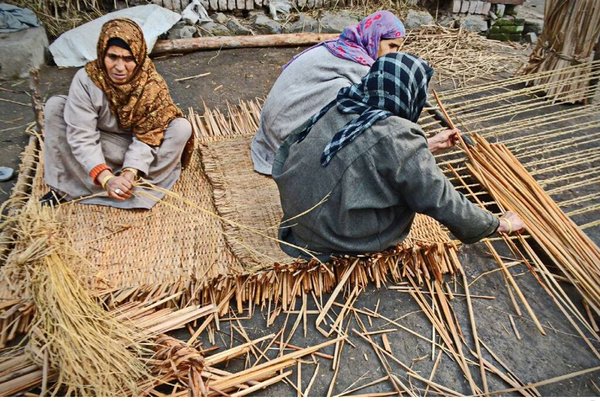
This traditional handwoven mat is crafted almost entirely from natural, biodegradable raw material: Typha angustifolia reeds (locally known as sarkand), harvested straight from the wetlands fringing Dal Lake and Anchar Lake in Srinagar, hand-combined with leftover paddy straw from the region’s rice harvest. No plastic, no synthetic fibre, no chemical processing — just reed, straw, and generations of hand-weaving technique passed down almost 300 years.
What earns Waguv its “eco-friendly handicraft” label isn’t just the raw material — it’s the performance. The same mat that lines a Kashmiri floor keeps the room noticeably warmer through brutal Himalayan winters and cooler through the short but intense summer months — a completely passive, zero-energy insulation system that today’s “green building” industry would happily brand and sell at a markup.
For centuries, Waguv wasn’t a lifestyle accessory — it was load-bearing culture. It carpeted ordinary homes, cushioned the wooden interiors of shikara boats gliding across Dal Lake, served as prayer matting inside mosques and Sufi shrines, and even doubled as informal roofing material in rural Kashmir. If your family had been in the Valley for a few generations, Waguv was almost certainly under your feet at some point in your life.
Why a 300-Year Tradition Nearly Vanished
Here’s the uncomfortable truth behind almost every “dying craft” story in India: it’s rarely about people forgetting how to make something. It’s about the math stopping working.
A single Waguv mat takes roughly four days of hand-weaving by two skilled artisans — starting with harvesting reeds and straw from the marshes, sun-drying and sorting the raw material, and only then beginning the actual weaving. That kind of labour-intensive timeline had zero chance of competing once cheap, machine-made synthetic flooring and foam mats flooded Indian markets from the 1980s onward.
Faced with better daily wages elsewhere, an entire generation of Kashmiri weaving families quietly walked away from the reed mat trade. Waguv survived mostly in pockets of rural Kashmir, where affordability and old habit kept it in occasional use — but in Srinagar’s cities and suburbs, it slipped from “everyday household item” to “something Nani used to have” in barely two decades. By the 2010s, Waguv had joined the government’s official list of endangered Kashmiri crafts — alongside walnut wood carving, silver filigree, and Sozni embroidery — all fighting the same uphill economics.
The Real Story Behind Kashmir’s Waguv Revival: A Father, A Daughter, and 20 Apprentices
Every craft-revival headline needs real people behind it, and Waguv’s are genuinely worth knowing.
Ghulam Hussain, a reed-mat weaver from Mir Behri, a settlement on the edge of Dal Lake, learned Waguv weaving as a child from his father and grandfather — only to drift away from it for years as economic pressure pushed him toward other work. Roughly 15 years ago, backed by the Department of Handicrafts and Handloom, Kashmir, Hussain made the decision to return to full-time Waguv weaving, determined to keep a nearly 300-year family tradition from quietly dying with his generation.
He didn’t just revive it for himself. Alongside his wife Amina, Hussain has personally trained around 20 apprentices, turning a nearly extinct craft into an actual source of livelihood for people who might otherwise have had none. His most personal success story, though, is closer to home: his daughter, Tanzeela Hussain, currently pursuing a Master’s degree in Persian at the University of Kashmir, still weaves Waguv in her spare time — a skill she picked up from her parents back in 12th grade specifically to keep the family legacy alive.
The duo have showcased their craft publicly at events like the “Know Your Artisan” exhibition hosted by the Handicrafts and Handloom Department at Kashmir Haat, Srinagar — grassroots visibility that eventually reached all the way to a prime-time national broadcast. Following the Mann Ki Baat mention, both artisans said, in essence, that they never imagined their quiet, generational craftsmanship would be recognised on that scale — and that the sudden national attention is already expected to translate into fresh buyer demand.
Behind the Scenes: How the Karkhandar Scheme Is Powering Kashmir’s Craft Comeback
Passion alone rarely rescues a dying craft — it usually needs a policy push standing right behind it, and for Waguv, that’s the Karkhandar Scheme.
Launched in 2021 by the Department of Handicrafts and Handloom, Kashmir, as a pilot initiative, the Karkhandar Scheme is built specifically to identify and rescue crafts on the edge of extinction — a list that includes walnut wood carving, silver filigree, Kani and Sozni weaving, Papier-Mâché, Khatamband woodwork, hand-knotted carpet weaving, engraved copperware, glazed pottery, Numdha felting, and, directly relevant here, Wagguv making.
The scheme’s structure is refreshingly hands-on: recognised master artisans — State, National, or Shilp Guru awardees — are supported to run their own training units, or Karkhanas, mentoring the next wave of craftspeople. Trainees receive a monthly stipend of around ₹2,000 during their probation period, while each craft unit gets roughly ₹25,000 in logistical support per training batch — effectively turning “apprenticing in a near-extinct craft” into a paid, structured career path rather than an act of unpaid nostalgia. By late 2025, close to 80 such units had already been sanctioned across the Valley, with fresh funding continuing to roll out district by district.
This institutional groundwork is a big reason Waguv could capitalise so fast on its national moment. In his address, PM Modi specifically credited Ghulam Hussain with having “significantly advanced this craft” with local government backing, tying the story directly to India’s broader Vocal for Local movement and encouraging citizens nationwide to consider adopting Kashmir’s Waguv at home.
From Floor Mat to Lifestyle Brand: Waguv’s Modern Reinvention
The smartest thing happening to Waguv right now isn’t nostalgia marketing — it’s genuine product reinvention. Rather than pitching only traditional floor mats to a generation that has largely moved on from mat-covered floors, today’s artisans and craft promoters are repositioning Waguv as a broader sustainable-lifestyle material.
New-generation Waguv products increasingly include:
- Handwoven curtains and window blinds — a natural, breathable, plastic-free alternative to synthetic window coverings
- Table runners and placemats — reshaping a floor-first craft for the modern dining table
- Coasters and small décor accents — an easy, low-cost entry point for first-time buyers
- Textured wall panels — leaning into Waguv’s natural weave as an intentional design statement, not something to hide
That pivot matters commercially far more than it might seem. It moves Waguv out of a shrinking niche (households still using reed-mat flooring) and directly into a fast-growing, high-intent buyer category: shoppers actively searching for eco-friendly décor, biodegradable home products, and plastic-free lifestyle goods — a space where “handwoven in Kashmir” isn’t just a heritage footnote, it’s a genuine competitive edge.
Waguv Snapshot: Key Facts at a Glance
| Aspect | Details |
|---|---|
| Core Material | Typha angustifolia reeds (sarkand), paddy straw |
| Origin Region | Wetlands around Dal Lake & Anchar Lake, Srinagar |
| Weaving Time | ~3–4 days per mat, typically by two artisans |
| Traditional Uses | Home flooring, shrine/mosque matting, shikara interiors, roofing |
| Modern Products | Curtains, blinds, table runners, coasters, wall décor |
| Craft Age | Nearly 300 years old |
| Government Scheme | Karkhandar Scheme, Dept. of Handicrafts & Handloom, Kashmir (est. 2021) |
| National Spotlight | PM Modi’s Mann Ki Baat, Episode 136 (July 26, 2026) |
| Current Status | Endangered in urban Kashmir, actively reviving through artisan-led and state-backed efforts |
It’s Not All Good News Yet: The Hurdles Waguv Still Faces
A prime-time mention is a spark, not a solution. Craft-sector observers point to a handful of stubborn challenges standing between Waguv and a genuine, sustained comeback:
- Slow, manual production: A four-day, two-person weaving cycle simply can’t match the throughput of machine-made flooring — a real barrier to attracting younger, full-time artisans.
- Thin margins: Traditional mats have long been priced for local affordability, often earning weavers far less per hour than the effort deserves — a gap that needs closing if Waguv is to attract fresh talent long-term.
- Low brand awareness: Outside craft exhibitions and now, a viral news cycle, most Indian shoppers still don’t know what Waguv is or where to buy it — a distribution and branding gap that national attention alone won’t fully solve.
- Ecological limits: Since the raw material is harvested directly from wetland ecosystems around Dal and Anchar Lake, any serious scale-up will need sustainable, regulated harvesting rather than unchecked extraction of a genuinely fragile resource.
These aren’t unique to Waguv — Pashmina weavers, Sozni embroiderers, and Papier-Mâché artisans face nearly identical structural challenges. What’s different for Waguv this year is timing: a national broadcast mention, an active funding scheme already in motion, and a consumer market that’s never been hungrier for authentically sustainable products.
Where Does Waguv Go From Here?
Strip away the headlines, and Waguv’s story is a stress test for a much bigger question: can slow, labour-intensive Indian handicrafts actually survive — and thrive — in a market built for speed and cost? The early signs are cautiously positive. Waguv has a genuinely strong sustainability story (biodegradable, chemical-free, energy-efficient by design) that lines up almost perfectly with where global consumer preferences are already heading. It has an active government scheme funding training and market access. And, as of this week, it has a level of national visibility that most heritage Indian crafts spend decades trying to earn.
What happens next depends on follow-through — sustained demand beyond an initial wave of curiosity, fairer pricing that actually compensates artisans for their time, and continued product innovation that fits how modern Indian homes actually look and function. Get that right, and Waguv won’t just be remembered as the craft PM Modi mentioned once on the radio — it could become Kashmir’s next genuine sustainable-lifestyle export, sitting alongside Pashmina and saffron on shelves far beyond the Valley.
For a mat that was quietly disappearing from memory just a few years ago, that would be one remarkable comeback story.
Frequently Searched Terms
Waguv Kashmir meaning, Wagoo mat online India, Vaghu mat PM Modi Mann Ki Baat, buy Kashmiri reed mat, Ghulam Hussain Tanzeela Waguv weavers, Karkhandar Scheme Kashmir handicrafts, eco-friendly Kashmiri home décor, Dal Lake artisan community, sustainable handwoven mats India