

Kashmiri Products for Your Home: 12 Timeless Treasures to Bring Kashmir Home
By: Kashmir Bazar | October 2026
Some souvenirs sit on a shelf. The best Kashmiri products become part of your life.
There are places you visit.
And then there are places you somehow carry back with you.
Kashmir belongs to the second category.
You may leave the Valley behind after a holiday, but the fragrance of saffron can remain in your kitchen. A carved walnut box can find a permanent place on your dressing table. A Pashmina can return every winter. A crewel curtain can change the personality of an entire room.
And somewhere in the middle of a family gathering, a steaming cup of Kahwa can take you back to a cold evening in the Valley.
That is the real magic of Kashmiri products.
They are not merely souvenirs. At their best, they are expressions of a living culture—created by farmers, weavers, embroiderers, woodcarvers, carpet makers and artisans whose skills have travelled across generations.
Several of Kashmir’s traditional crafts also have formal Geographical Indication recognition, including Kashmir Pashmina, Kashmir Paper Machie, Kashmir Walnut Wood Carving and Kashmiri Hand Knotted Carpet. Kashmir Saffron has its own GI registration as an agricultural product.
For today’s homeowner, the challenge is not finding something beautiful.
It is deciding what belongs in the home.
Here is where the journey begins.
01. Start With the Fragrance of Kashmir: Saffron
Before Kashmir becomes a colour, a textile or a piece of furniture, it can become a fragrance.
Kashmiri saffron, or kesar, is one of the Valley’s most prized agricultural products and is particularly associated with the Pampore area.
The spice is treasured for its distinctive aroma, flavour and colouring properties. Kashmir Saffron was granted GI registration in 2020, providing geographical protection for the recognised product.
But saffron’s greatest advantage for the modern home is its versatility.
A tiny quantity can be used in:
- Kahwa
- Kheer
- Phirni
- Rice dishes
- Festive sweets
- Milk-based drinks
- Special-occasion recipes
It also makes an elegant premium gift.
What should you budget?
Small saffron packs can start in the few-hundred-rupee range, while larger quantities, premium grades and gift packaging can cost considerably more.
Indicative budget: ₹300–₹1,500+
The key is to buy on the basis of stated origin, quality, packaging and traceability—not simply because a label says “Kashmiri.”
02. Kahwa: Kashmir in a Cup
Imagine a winter evening.
The windows are slightly misted. Conversation is slow. There is the fragrance of cardamom and cinnamon in the air.
Then comes Kahwa.
Kashmiri Kahwa traditionally combines green tea with aromatic ingredients and is often served with nuts and, depending on the preparation, saffron.
It is more than another tea option. It is closely connected with Kashmiri hospitality.
Make Kahwa part of your home
Keep a jar ready for guests.
Serve it after dinner.
Prepare it during winter weekends.
Or turn it into a small ritual when friends come over.
Indicative budget: ₹300–₹800+
For gifting, Kahwa pairs beautifully with saffron, almonds, walnuts and a small handcrafted container.
03. Pashmina: The Winter Heirloom
Some things are bought.
Others are inherited.
A finely crafted Pashmina has the potential to become the second kind.
Kashmir Pashmina is a GI-registered craft, and the category encompasses a rich tradition of textile production and craftsmanship.
Its appeal lies in the combination of softness, warmth, lightness and craftsmanship.
But consumers should be careful with terminology.
A product described casually as “Pashmina” should not automatically be assumed to be a fully authentic traditional Kashmiri Pashmina. Buyers should ask about material composition, craftsmanship, origin and relevant authentication or certification.
What can you buy?
- Pashmina shawls
- Kani-style shawls
- Embroidered shawls
- Stoles
- Winter accessories
- Premium gift pieces
Indicative budget: ₹5,000–₹25,000+
Highly intricate or extensively handcrafted pieces can cost considerably more.
A Pashmina is therefore best considered not as an ordinary accessory, but as a long-term purchase.
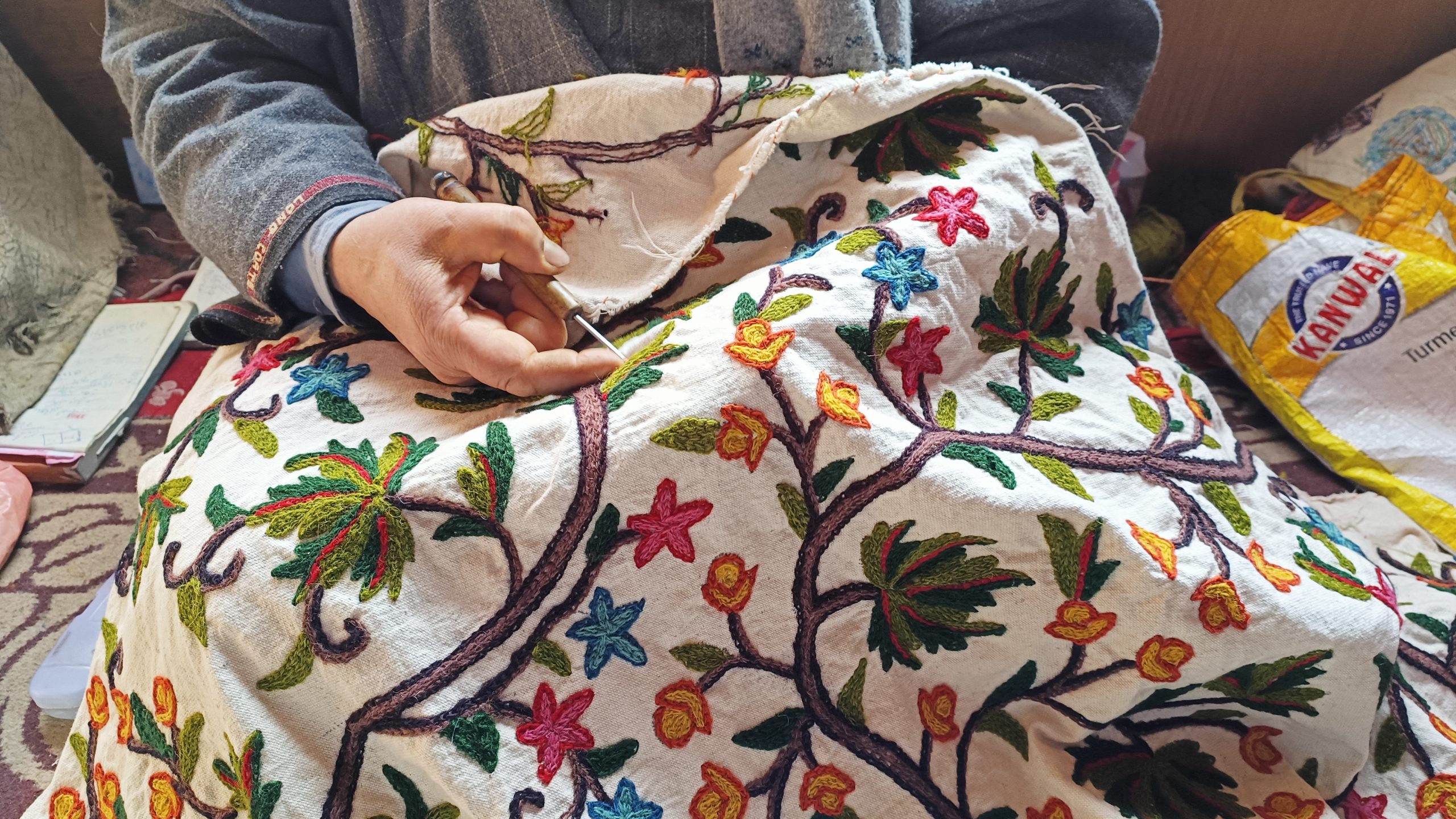
04. Crewel Curtains: Give Your Windows a Kashmiri Accent
Here’s a Kashmiri product that deserves far more attention.
Crewel embroidery.
Traditionally associated with decorative furnishing textiles, crewel can turn an ordinary curtain into an eye-catching feature.
Imagine a simple room with wooden furniture, neutral walls and soft natural light.
Now add embroidered Kashmiri curtains.
The room changes.
Crewel works particularly well for:
- Curtains
- Bedspreads
- Cushion covers
- Upholstery
- Table runners
- Decorative panels
Kashmir Bazar can position crewel particularly strongly as a heritage-meets-modern-interiors category.
Tentative costing
Because finished curtains depend on window size, fabric, embroidery density, lining and stitching, prices vary considerably.
A practical planning range could be:
Crewel fabric: ₹1,500–₹2,500+ per metre
Finished curtain pair: ₹4,000–₹8,000+
Heavily embroidered/custom sets: ₹10,000–₹25,000+
These figures are indicative rather than fixed retail quotations.
The design idea
You don’t need crewel everywhere.
One pair of statement curtains can be enough.
That is often the secret to using traditional craft successfully in contemporary interiors: let one beautiful piece do the talking.
05. Papier-Mâché: Kashmir’s Most Colourful Conversation Starter
A Papier-Mâché piece can make a quiet corner suddenly interesting.
A decorative box.
A tissue holder.
A vase.
A set of coasters.
A hanging ornament.
The craft’s colourful surfaces and intricate painted motifs make it particularly adaptable to modern homes.
Kashmir Paper Machie is among the officially GI-registered Kashmiri crafts.
Try it in unexpected places
Instead of treating Papier-Mâché as traditional décor only, use it alongside contemporary furniture.
A hand-painted box can sit beside a modern lamp.
A decorative vase can brighten a bookshelf.
A small ornament can become part of a festive display.
Indicative budget: ₹200–₹10,000+
Smaller products are accessible, while larger and more intricately decorated pieces can command substantially higher prices.
06. Walnut Wood: Where Craft Meets Furniture
If there is one material that can immediately make a room feel warmer, it is wood.
Kashmiri walnut wood takes that idea several steps further.
Kashmir Walnut Wood Carving is GI registered, reflecting the recognised identity of this traditional craft.
The carving can range from delicate decorative work to substantial furniture.
For smaller homes
Start with:
- Jewellery boxes
- Serving trays
- Photo frames
- Pen stands
- Small storage boxes
- Decorative panels
For larger interiors
Consider:
- Side tables
- Centre tables
- Cabinets
- Carved furniture
- Statement wall panels
Indicative budget: ₹1,000–₹20,000+
Large, intricately carved furniture can move far beyond this range.
A design tip
Walnut works particularly well with neutral interiors.
White walls.
Beige upholstery.
Natural flooring.
Soft lighting.
Then let the carving become the visual focus.
07. The Kashmiri Carpet: Art You Walk On
A Kashmiri carpet is perhaps the clearest example of why traditional craftsmanship should not be reduced to “decoration.”
It is functional art.
Kashmiri Hand Knotted Carpet has GI recognition, and traditional carpet-making can involve significant time and specialised craftsmanship.
The price of a carpet can vary enormously according to:
- Size
- Fibre
- Knot density
- Design
- Colour
- Craftsmanship
- Age
- Provenance
A practical buying range
Small pieces: ₹5,000–₹20,000+
Medium carpets: ₹20,000–₹75,000+
Large/premium carpets: ₹75,000 to several lakhs
For an expensive purchase, ask detailed questions about materials, knotting, dimensions and provenance.
A beautiful carpet can last for years.
But it should also be bought with patience.
08. Dry Fruits: Kashmir’s Edible Gift Box
Not every Kashmiri treasure needs to decorate your house.
Some belong in the kitchen.
Walnuts and almonds are among the easiest ways to introduce Kashmir into everyday routines.
Add walnuts to breakfast.
Serve almonds to guests.
Use dried apricots in desserts.
Create a festive dry-fruit tray.
Or send a carefully packed selection as a gift.
Popular choices
- Kashmiri walnuts
- Walnut kernels
- Almonds
- Dried apricots
- Dried figs
- Raisins and other dried fruits
Indicative budget: ₹400–₹1,500+
Premium varieties and gift boxes can cost more.
09. Kashmiri Spices: A Small Pantry, A Big Difference
The quickest way to make a home feel different can sometimes be through its food.
Build a small Kashmiri spice shelf.
Include:
- Kashmiri red chilli
- Fennel
- Dry ginger
- Black cumin
- Saffron
- Kahwa spices
- Regional spice blends
You do not need to recreate an elaborate Kashmiri kitchen.
Even familiar dishes can become more aromatic when regional ingredients are used thoughtfully.
Indicative starter budget: ₹300–₹1,500
For food lovers, this may be one of the most affordable ways to begin a Kashmiri collection.
10. Copperware: When Kitchenware Becomes Décor
There is something wonderfully old-world about a handcrafted copper vessel.
It catches the light.
It feels substantial.
And it carries a strong connection with traditional Kashmiri household culture.
Popular choices include:
- Samovars
- Tea kettles
- Serving bowls
- Decorative vessels
- Trays
- Traditional kitchenware
A copper piece can sit equally comfortably in a traditional dining room or a contemporary kitchen.
Indicative budget: ₹2,000–₹15,000+
The final price depends on weight, size, workmanship, detailing and design.
11. Kashmiri Gift Hampers: Don’t Choose Just One Story
What if you could give someone Kashmir in a box?
That is the idea behind the modern Kashmiri gift hamper.
Instead of one product, combine several experiences.
The ₹1,000–₹2,500 Kashmir Box
- Kahwa
- Saffron
- Almonds
- Small Papier-Mâché piece
The ₹2,500–₹5,000 Heritage Box
- Premium saffron
- Kahwa
- Dry fruits
- Papier-Mâché décor
- Small walnut item
The Premium Kashmir Collection
- Saffron
- Premium dry fruits
- Handcrafted textile
- Walnut wood
- Papier-Mâché
- Luxury packaging
Such combinations can work particularly well for:
- Weddings
- Diwali
- Eid
- Christmas
- Housewarmings
- Corporate gifting
- Anniversaries
- Overseas gifts
Bulk and customised orders can have completely different pricing, so buyers should request a quotation based on quantity and packaging.
12. Kashmir in the Details: Small Décor Pieces That Matter
You don’t have to spend ₹50,000 to bring Kashmiri craftsmanship into your home.
Sometimes ₹500 is enough.
A Papier-Mâché coaster set.
A walnut box.
An embroidered cushion.
A small decorative piece.
A handcrafted tray.
The secret is curation.
Choose fewer pieces.
Choose better pieces.
And give each one enough space to be noticed.
How to Create a Kashmiri-Inspired Home Without Making It Look Overdone
This is where modern styling matters.
A Kashmiri home does not have to mean filling every room with traditional motifs.
Instead, try the one-room, three-texture approach.
Start with textiles
Use crewel curtains or embroidered cushions.
Add wood
Introduce a walnut tray, box or small table.
Add colour
Bring in a Papier-Mâché piece.
Add fragrance
Keep saffron and Kahwa in the kitchen.
Add warmth
If your budget allows, finish the room with a traditional carpet.
The result can feel sophisticated rather than crowded.
Authenticity Matters More Than the Word “Kashmiri”
The popularity of Kashmiri crafts also creates a challenge.
Not everything marketed as “Kashmiri” necessarily comes from the traditional craft ecosystem associated with the Valley.
That is why shoppers should ask questions.
Where was it made?
What material was used?
Is it handmade or machine-made?
What does the certification actually establish?
Who made it?
Is the seller able to provide meaningful product information?
For GI-recognised products, consumers should understand that GI protection identifies and protects the geographical origin and characteristics of recognised goods. It does not mean that every product carrying a similar-sounding commercial description has automatically been authenticated.
This distinction becomes particularly important when buying expensive Pashmina, carpets and handcrafted furniture.
How Much Does It Cost to Bring Kashmir Home?
For a first-time buyer, here’s a practical guide:
| Kashmiri Product | Approximate Starting/Planning Range |
|---|---|
| Saffron | ₹300–₹1,500+ |
| Kahwa | ₹300–₹800+ |
| Dry fruits | ₹400–₹1,500+ |
| Spices | ₹300–₹1,500 |
| Papier-Mâché | ₹200–₹10,000+ |
| Crewel fabric | ₹1,500–₹2,500+ per metre |
| Finished crewel curtains | ₹4,000–₹25,000+ |
| Walnut décor | ₹1,000–₹20,000+ |
| Pashmina | ₹5,000–₹25,000+ |
| Copperware | ₹2,000–₹15,000+ |
| Hand-knotted carpet | ₹5,000–₹75,000+ |
| Premium carpets | ₹75,000–several lakhs |
These are indicative market-planning ranges, not fixed quotations. Handmade goods vary according to material, craftsmanship, size, embroidery, knot density, customisation, season and provenance.
And Then Comes the Samawar
The One Kashmiri Object That Deserves Its Own Place
Every list of Kashmiri products can end with a beautiful shawl.
But perhaps this one should end differently.
With a Samawar.
The traditional Kashmiri Samawar is not simply a vessel.
It is a symbol of gathering.
Of tea.
Of conversation.
Of guests arriving on cold evenings.
Of a host saying, in the most Kashmiri way possible: sit down, stay a while.
Traditionally associated with preparing and serving tea, the Samawar has a distinctive structure designed around a central heat chamber and a surrounding vessel for the beverage.
Its association with Kahwa makes it particularly evocative.
And while modern kitchens may use electric kettles and coffee machines, the Samawar occupies a completely different cultural space.
It turns serving tea into an occasion.
Why have a Samawar at home?
Because sometimes the value of an object is not measured by how often you use it.
It is measured by what happens when you bring it out.
A family gathering.
A festival.
A dinner with old friends.
A winter afternoon.
A wedding.
A housewarming.
Place a Samawar at the centre of the table and it immediately becomes a conversation starter.
Samawar styles and prices
Traditional copper Samawars vary considerably according to:
- Size
- Copper weight
- Embossing
- Engraving
- Handmade detailing
- Decorative finish
- Construction quality
Indicative budget: ₹3,000–₹15,000+
Decorative and heavily handcrafted Samawars can cost considerably more.
For collectors, the workmanship matters as much as the vessel itself.
Kashmir Bazar: More Than Shopping, a Way of Bringing Heritage Home
The best Kashmiri products do something unusual.
They make heritage practical.
Saffron belongs in the kitchen.
Kahwa belongs around the table.
Pashmina belongs in the wardrobe.
Crewel belongs at the window.
Walnut belongs on the furniture.
Papier-Mâché belongs on the shelf.
Carpets belong underfoot.
And the Samawar?
The Samawar belongs where people gather.
That is what makes Kashmiri craftsmanship so relevant even in modern homes.
It does not demand that you live in the past.
It simply gives the present a little more character.
Bring Home a Piece of Kashmir
From the fields of Pampore to the workshops and homes where generations of craft knowledge have survived, Kashmir’s products carry something that mass-produced décor cannot easily reproduce: a sense of place.
At Kashmir Bazar, the idea is simple—make it easier for customers to discover the flavours, textiles, crafts and decorative traditions associated with Kashmir, whether they are shopping for themselves or searching for a gift with a story behind it.
Because the most memorable thing you can bring back from Kashmir may not be a photograph.
It may be something you continue to use years later.
A shawl.
A box.
A curtain.
A carpet.
A cup of Kahwa.
Or a Samawar waiting quietly for the next gathering.
Kashmir Bazar — bring Kashmir home, one timeless treasure at a time.